Sari la conținut
  • intrări

    203
  • comentarii

    173
  • citiri

    2.059.724

Intrări în acest blog

Pe la FED bate vantul schimbarii limbajului. Vor sa reduca valoarea QE2 sau sa-l termine mai repede de Iunie ceea ce se traduce in semnal de Long Dolar. Daca rata la Euro creste si la conferinta Mr. Trichet sugereaza ca va urma o succesiune de cresteri ale ratei dobanzii raman long Euro pentru 1.50 pentru Mai, urmand sa vad ce spune Bernanke despre asta.

vacanta de Pasti

Doamnelor si Domnilor

De maine incepe vacanta asa ca echipa emisiunii va doreste vizionare placuta in continuare pana la sedinta ECB din Mai.

Oare zicala "Sell in May and go away" mai merge daca nenea Trichet ridica rata?

Eu zic ca nu peste 50%.

Se zice pe la Reuters ca


. "would be ready to support the extension of the European Financial Stability Facility via an extra commitment of money from the IMF", according to a U.S. official who told Reuters news."


Dolarul a fost hacuit in 10 minute. Normal,


Cu alte cuvinte cu asa bani la tescherea problema PIGS paleste rau.


O confirmare a povestii si ne corectam pe Decembrie.


Daca totusi va fi adevarat cred ca yankeii au zis ca e cazu sa puna si ei osu' la treaba atata timp cat ei au pus-o de criza. Si cum la ei criza s a terminat si la noi nu, nu ar fi normal sa se termine si la noi dar cu banii lor?


Ca tot ei castiga pana la urma :D

Urmeaza Portugalia si Spania

Daca la Irlanda e vorba de vreo 80 de miliarde de Euro, Portugalia banuiesc ca tot pe acolo, cat o fi oare pentru Spania suma?


C-am mare.


Asa ca, dupa ce trece scandalul cu Irlanda avem pe ce sa dam Sell.


Si ca sa nu uit, in primavara se vorbea si de Italia pe ici pe colo.

Un roman tare zice asa:

Ca daca Luni, adica poimaine, nemtii si francezii ii ajuta pe greci, problemele UE vor continua cu restul tarilor aflate in vizor iar daca nu, atunci Euro ca si moneda se termina brusc.


Prima varianta e posibila dar cum se poate ca Euro sa se termine brusc? Ha Ha Ha Ha. Nu mai pot de ras......

Ce se vor intampla cu euroii ce stau acum pe post de rezerva prin bancile lumii? Se apuca sa denomineze in vechile monede? Marci, Lire etc? Se pastreaza procentele initiale? Imi e foarte greu sa cred o asemenea nebunie. Nebunia ar fi imensa pe toate pietele.

Sigur ca rasul e c-am nervos si a inceput deja sa ma doara si capu',nu de alta dar perechea mea favorita Euro/Usd se va trasforma probabil in DM/USD .


http://webtv.realitatea.net/actual/dinu-patriciu-crede-ca-tara-noastra-s-a-asezat-pe-acelasi-drum-cu-al-greciei?autoPlay=true#ve_video_player_a

Un nou val al interventiei?

TOKYO (MNI) – Yen-selling interventions conducted by the Group of

Seven industrialized nations is estimated to have totaled Y2 trillion to

Y2.5 trillion, the Yomiuri Shimbun reported on Sunday.


The newspaper said that the European Central Bank, Bank of England

and the Federal Reserve conducted yen-selling interventions in their

markets after the Tokyo market closed on Friday.


This is the first concerted G-7 forex action since September 2000,

when the euro came under heavy selling as capital flowed into the U.S.

stock market at the peak of the IT bubble.


The newspaper also noted that the bulk of the yen-selling

interventions was done by Japanese authorities.


Japanese Finance Minister Yoshihiko Noda said on Friday, “Following

the G-7 agreement, the government and Bank of Japan will implement

intervention in the foreign exchange market from 9 a.m. (0000 GMT).”


By Market News International


Un NFP "neobisnuit"

Pentru US singura solutie ramane dolarul slab. A fost pana acum randul Europei sa se "scoata" pe curs, de acum, la loc cu Dolarul acolo unde ii este locul:slab. Vreu crestere, da-mi moneda slaba, nu tot timpul ca mai sunt si altii in Calea Lactee.


Vineri, inca o dovada a interventiei si inca in consens,partea asta mi-a placut cel mai mult. sa vezi S&P si Dow la vale pe prima reactie, sa vezi monedele cu comoditati in coada tot pe vale la primul spike si totusi,,,, Euro ferm la deal fara drept de apel. Normal ca si Lira ca doar e in urma un pic, are de recuperat.


Inca o data felicitari domnului Trichet and Co.


Saptamana ce vine sper ca nemtii sa faca din nou ceea ce stiu ei cel mai bine, sa ne arate cum se munceste si sa ne dea cifrele de care avem nevoie ca sa nu mai avem nevoie "mici" interventii.


Aud mai are putin pana la 9250 targetul previzionat de acum 2 saptamani.

Lira e pe val dar un pic prea intinsa. Daca nu se aseaza bine pe 1.60 o astept la 1.5850 sa mai incercam odata impreuna de data asta sa trecem dealul.

Euro are o tinta frumoasa: 1.35


Pana vineri 1,3450 este foarte probabil daca nu prea aproape.

blog-0064309001349003937.jpg

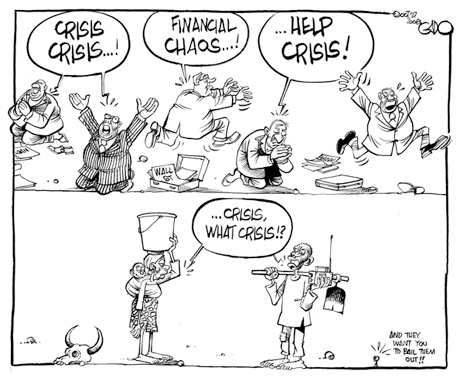
Mark Mobius, omul din spatele Fondului Proprietatea, preşedinte executiv al Templeton Emerging Markets Group, este de părere că la nivel mondial nu se poate vorbi de o criză reală, ci de una artificială, creată de speculanţi care şi-ar dori ca UE să se destrame, scrie gandul.info.


http://www.ghimpele.ro/2012/09/mark-mobius-omul-care-manevreaza-284-miliarde-euro-in-romania-criza-economica-este-fabricata/

Se spune ca cel de al 2 lea picior al recesiunii ar trebui sa inceapa sa se formeze saptamana asta, tehnic vorbind, fundamental vorbind oricand se poate nu numai acum iar statistic, August si Septembrie sunt in favoarea dolarului ceea ce ar fi in concordanta cu primele doua.


Primele semne ca totusi nu se va intampla ca-n 33' sunt mediocre, Euro a reusit sa reziste caderii, deocamdata, sub 2750 si a atacat 2900, Lira in schimb fundamental nu o duce prea bine zilele asta si din previziuni pe ce a mai ramas din saptamana nici atat. AUD si CAD au capatat un suflu nou pe fundament american cu Dow si SP pe noi varfuri in sus dar totusi sub asteptari iar Francul face ce stie adica rezista ... si rezista.... si rezista.


Asa ca, tot ce trebuie sa vedem saptamana asta sau macar pe inceputul lui Septembrie este un nou val de cadere a dolarului. Astfel statistica, fundamentul si tehnicul sa nu mai lucreze in favoarea crizei iar paternul Celei de a Doua Mari Crize sa fie invers Primei.


La Euro raman inca cu SL ul la 2750 (mental ca nu ma buy) iar pe final de saptamana daca americanii fac contabilitatea sa dea bine il mut la 2800 pentru ca euro ar trebui sa treca de 2900 macar ca testare.

At some point, we will get the headlines hitting the wires that the BOJ is buying USD/JPY.


We may also get headlines that the Fed, the ECB and BOE are buying USD/JPY as well., depending on the time of day. That does not necessarily mean that coordinated intervention is underway.


Often central banks will act “as agent” for other central banks, intervening in their local markets and then handing over the net position to, in this case, the BOJ.


Coordinated intervention means that each central bank acts in coordinated fashion for there own accounts, showing the market that each central bank has “skin in the game”, giving the action greater credibility.


The first hurdle the Japanese will want to overcome is 79.75/80.00. Beyond that is the 81.75 area, the support line broken decisively earlier this week.


Forexlive.com


Trichet, manca-i-as gura lui

Azi-dimineata il asteptam pe Trichet cu degetul pe buy. am dat un buy la un moment dat cand bondurile Spaniei s-au vandut bine si cu el am ramas.


Zic l-as ca vine omu' si facem banu'


Si... a venit.


Prima oara a zis ca o tine asa cum e acum.

Piata se astepta la mai mult de cat e acum

Euro a picat 50.


A doua oara, a zis ca va continua sa cumpere bonduri

Piata a zis: - Bine

Euro a mai picat 50

.

A treia oara a spus acelasi lucru ca a doua oara dar mai apasat

Piata a zis - Daaa???

Euro s-a intors 140 in sus.


Spre final nu stiu ce a mai zis ca am avut treaba dar la inchidea Londrei era tot acolo sus.


Nu zic ce am facut, spun doar ca am dat numai buy si nu am pierdut.

Greu de crezut? Cred si eu.


Maine la NFP , daca prima miscare e buy la euro si SP buy, ne corectam pe Decembrie.

Daca Euro e pe dos ca SP .. nu stiu.


Azi am auzit ca, dupa PIGS pe fagas intra si Franta. Da. Parisul o sa fie salvat de Berlin. Interesant, nu?

Traim "vremuri istorice"

Euro, daca trece decisiv de 1.40 are sanse mari sa faca acelasi gen de miscare cu cea din 2007, nu si din aceleasi motive fundamentale. dar ce este evident este totusi ca 1.40 pe istorie chiar este o zona de rezistenta mare.


Dar cum traim "vremuri istorice" asa cum zice un preten, Mr. Trichet este in continuare" foarte vigilent" cu privire la inflatie si considera ca luna ce vine Rata la Euro are sanse mari sa creasca in pofida relaxarii minore a presiunii inflationiste date de petrol si materiile prime, asa ca raman Long pe Euro cel putin pana la urmatoarea sedinta a ECB din Aprilie


Jen ul , vedeta emisiunii a avut ghinionul sa aiba de cateva luni deja Optiuni de Sell chiar sub minimul istoric ce s-au activat exact in cea mai putin lichida perioada din zi adica acolo unde Londra si NY nu erau in piata. Probabilitatea unei intervenii a bancii centrale pentru slabirea lui este foarte mare in urmatoarele zile, zice Nomura.


Ca de obicei, orice eveniment cat de cat iesit din comun este exagerat analizat si daca se si suprapune cu o perioada generala de marcare a profitului atunci totul pare ca un inceput de noua criza. Interesant este cand te trezesti a doua zi si vezi ca defapt totul nu a fost decat un spike nebunesc si ca totusi viata merge inainte mai mult sau mai putin radiat.


Caci traim "vremuri istorice".

Totul de vanzare

Cand te gandesti ca in 80% din cazuri Euro a inceptut pe 8 Septembrie trendul de buy al sfarsitului de an parca nu-ti da ghes inima sa zici ca si de data asta vom fi pe medie.. Sua a primit o lovitura azi care, explicata strengareste de "expertii" bancilor mari - "era de asteptat si nu e grav" -a dus la ce s-a vazut pe SP, DOW si... Euro!!!


Ma asteptam ca interventia de azi pe Dolar sa fi avut loc mai devreme, acum 2 saptamani cand pericolul dublei recesiuni era mai mic ca nu am altfel cum sa numesc miscarea de pe "Existing Home Sales" ; cine dreq cumpara cand va fi prost?, cand Jen ul devine nesimtit de scump si Un Frank se lupta cu toti sa nu valoreze cat 5 dolari .


Probabil ca "al doilea picior" al recesiunii nu a fost inca inclus in pret, probabil ca a cumpara acum, orice, de la actiuni pe Google, marele "aparator" al neutralitatii Net ului, sau pe Apple care tocmai ce introduce noi softuri de recunoastere vocala si vizuala pentru a depista cine foloseste telefonul abuziv, inca pare scump.

Mie mi se pare totul scump, sincer,...poate Skol la cutie sa para acceptabil.


Si pentru ca si Obama e in concediu am sa ma duc si eu pana pe 8 Septembrie cand revin copiii din concedii si parintii se pregatesc de scoala. Si de cumparat bonduri


In rest, totul e de vanzare.

This is just the beginning...

Tot vineri (acum o saptamana)s-a petrecut un alt eveniment, de data aceasta având conotaţii istorice. Aflat în vizită în Turcia, premierul chinez Wen Jiabao a anunţat, împreună cu premierul turc Recep Erdogan, eliminarea dolarului din contractele bilaterale dintre cele două ţări. Aşa se face că, începând cu data amintitei vizite, valutele utilizate în schimburile dintre cele două ţări vor fi lira şi yuan-ul. Este primul contract de acest tip care practic aruncă în derizoriu moneda americană. Schimburile comerciale dintre China şi Turcia au în prezent o valoare de peste 15 miliarde de dolari, iar cei doi oficiali îşi propun triplarea acestora în următorii cinci ani.


Continuarea pe http://trenduri.blogspot.com/2010/10/noua-conflagratie.html

1. We, the G20 Finance Ministers and Central Bank Governors, met today to address ongoing economic and financial challenges and to agree on a way forward to fulfill the mandates given to us by our Leaders.


2. The global recovery is strengthening but is still uneven and downside risks remain. While most advanced economies are seeing modest growth and persisting high unemployment, emerging economies are experiencing more robust growth, some with signs of overheating. We reaffirm our willingness to ensure a consistent and coordinated response to the challenges we face, address the root causes of the crisis and restore global economic growth on a sounder basis.


3. We reaffirm our commitment to coordinated policy action by all G20 members to achieve strong, sustainable and balanced growth. Our main priority actions include implementing medium term fiscal consolidation plans differentiated according to national circumstances in line with our Toronto commitment, pursuing appropriate monetary policy, enhancing exchange rate flexibility to better reflect underlying economic fundamentals and structural reforms, to sustain global demand, increase potential growth, foster job creation and contribute to global rebalancing. We discussed progress made since the Seoul Summit and stressed the need to reduce excessive imbalances and maintain current account imbalances at sustainable levels by strengthening multilateral cooperation. We agreed on a set of indicators that will allow us to focus, through an integrated two-step process, on those persistently large imbalances which require policy actions. To complete the work required for the first step, our aim is to agree, by our next meeting in April, on indicative guidelines against which each of these indicators will be assessed, recognizing the need to take into account national or regional circumstances, including large commodity producers. While not targets, these indicative guidelines will be used to assess the following indicators: (i) public debt and fiscal deficits; and private savings rate and private debt (ii) and the external imbalance composed of the trade balance and net investment income flows and transfers, taking due consideration of exchange rate, fiscal, monetary and other policies. We also adopted a timetable for developing the 2011 action plan that will implement our Framework for Strong, Sustainable and Balanced Growth and monitor the commitments already made. As agreed in Seoul, we call on the IMF to provide an assessment as part of the Mutual Assessment Process on progress towards external sustainability and consistency of policies at our October meeting. At that time, we will also review a report on the MAP including an action plan informed by the analysis on the root causes of persistently large imbalances based on the agreed guidelines. We will also review an assessment of progress made in meeting commitments made in Seoul.


4. The international monetary system (IMS) has proven resilient, but vulnerabilities remain, which raise the need to improve it in order to ensure systemic stability, promote orderly adjustment, and avoid disruptive fluctuations in capital flows, disorderly movements in exchange rates – including advanced economies with reserve currencies being vigilant against excess volatility – and persistent misalignement of exchange rates. Today we agreed on a work program aimed at strengthening the functioning of the IMS, including through coherent approaches and measures to deal with potentially destabilizing capital flows, among which macro-prudential measures, mindful of possible drawbacks; and management of global liquidity to strengthen our capacity to prevent and deal with shocks, including issues such as Financial Safety Nets and the role of the SDR. This will also require discussions on exchange rates issues and on the strengthening of IMF surveillance. We look forward to discussing at our next meeting in April a report from the IMF on the strengthening of the IMS and reports by the World Bank and the RDBs building on experiences, on actions to strengthen local capital markets and domestic currency borrowing in emerging and developing economies. In addition, we will benefit from the work of OECD on capital flows, and from the contributions of other relevant international organizations, such as UNCTAD.


5. We discussed concerns about consequences of potential excessive commodity price volatility and asked our deputies to work with international organizations and to report back to us on the underlying drivers and the challenges posed by these trends for both consumers and producers and consider possible actions. Keeping in mind the impact of this volatility on food security, we reiterated the need for long-term investment in the agricultural sector in developing countries. We welcomed the interim report by the IEF, IEA and OPEC to improve the quality, timeliness and reliability of the Joint Organization Data Initiative Oil (JODI oil) and call for further work on strategies to implement these recommendations to be detailed in their final report. Building on the Riyadh symposium held on January 24th, we encourage the IEF to provide concrete strategies to improve the producer-consumer dialogue at its next meeting on February 22nd 2011. Following our Leaders’ request, we call on the IMF and IEF, as well as IEA, GECF and OPEC, to develop by October 2011 concrete recommendations to extend the G20’s work on oil price volatility to gas and coal. We look forward to discussing at our next meeting the report of IEF, IEA, OPEC and IOSCO on price reporting agencies as well as the interim report on food security currently being undertaken by the relevant international organizations, and IOSCO’s recommendations, and the FSB’s consideration of next steps, on regulation and supervision of commodity derivatives markets notably to strengthen transparency and address market abuses.


6. We commit to pursuing the reform of the financial sector. Despite good progress, significant work remains. We will implement fully the Basel III new standards for banks within the agreed timelines while taking due account of the agreed observation periods and review clauses in respect of the liquidity standards. Likewise, we will implement in an internationally consistent and non-discriminatory way the FSB’s recommendations on OTC derivatives and on reducing reliance on credit rating agencies’ ratings. We look forward to the completion by the next Leaders’ Summit of the following ongoing work on systemically important financial institutions as scheduled in the FSB work program for 2011: determination of Global-systemically important financial institutions by FSB and national authorities based on indicative criteria, a comprehensive multi-pronged framework with more intensive supervisory oversight; effective resolution capacity including in a cross-border context; higher loss absorbency measures through a menu of viable alternatives that may include, depending on national circumstances, capital surcharges, contingent capital and bail-in instruments ; and other supplementary requirements as determined by the national authorities including systemic levies. Once the framework initially applicable to G-SIFIs is agreed, we will move expeditiously to cover all SIFIs. We look forward to the 2 reports to be finalized by the BIS, IMF and FSB on macro-prudential frameworks and by the FSB, IMF and World Bank with input of national authorities on financial stability issues in emerging market and developing economies by our October meeting. We look forward to the recommendations that the FSB will prepare by mid-2011 on regulation and oversight of the shadow banking system to efficiently address the risks, notably of arbitrage, associated with shadow banking and its interactions with the regulated banking system. We call on IOSCO to develop by mid-2011 recommendations to promote markets’ integrity and efficiency notably to mitigate the risks created by the latest technological developments. We also call on the FSB to bring forward for our next meeting comprehensive proposals to strengthen its governance, resources and outreach. We urge all jurisdictions to fully implement the FSB principles and standards on sounder compensation practices agreed by the G20 Leaders in Pittsburgh and call on the FSB to undertake ongoing monitoring in this area and look forward to receiving the results of a second thorough FSB peer review midyear to identify remaining gaps. We call on the OECD, the FSB and other relevant international organizations to develop common principles on consumer protection in the field of financial services by our October meeting. We reaffirm our commitment to more effective oversight and supervision, including regular stress testing of banks building on the Basel committee’s principles.


7. We reiterated our call to improve compliance with international standards and strengthen the process of identifying non-cooperative jurisdictions. We look forward to the forthcoming update by FATF of the public list of jurisdictions with strategic deficiencies and to a public list of all jurisdictions evaluated by the FSB ahead of the next G20 Leaders Summit. We welcome the 18 peer reviews issued by the Global Forum on Transparency and Exchange of Information and urge all jurisdictions so far identified as not having the elements in place to achieve an effective exchange of information to promptly address the weaknesses. We look forward to the progress report by November 2011, based on the expected completion of around 60 phase 1 reviews, to address in particular the jurisdictions’ quality of cooperation with the Forum, level of compliance and unsolved deficiencies. We call upon more jurisdictions to join the Global Forum and to commit to implementing the standards. We urge all jurisdictions to extend further their networks of Tax Information Exchange Agreements and encourage jurisdictions to consider signing the Multilateral Convention on Mutual Administrative Assistance in Tax Matters.


8. We discussed the way forward on implementing the Seoul Development Consensus on Shared Growth and its Multi-Year Action Plan. In particular we welcome the launch of the Global Partnership for Financial Inclusion last December. We also welcome the appointment of the members of the High Level Panel for Infrastructure Investment, and look forward to their recommendations by September. We discussed the report made by the UN High-Level Advisory Group on Climate Change Financing. We welcome the positive outcomes of the Cancun Climate Conference, and in particular the decision to establish a Green Climate Fund, and will pursue discussions on mobilizing sources of financing, including public and private, bilateral and multilateral, as well as innovative sources, consistent with the objective, provisions and principles of the UN Framework Convention on Climate Change (UNFCCC).


9. We reaffirm our commitment to free trade and investment recognizing its central importance for the global recovery. We will refrain from introducing, and oppose protectionist trade actions in all forms and recognize the importance of a prompt conclusion of the Doha negotiations.


10. We stand ready to support Egypt and Tunisia, with responses at the appropriate time well coordinated with the international institutions and the regional development banks to accompany reforms designed to the benefit of the whole population and the stabilization of their economies.


© Copyright ministère de l'Économie, de l'industrie et de l'emploi, 19/02/2011

 

Informații Importante

Am plasat cookie-uri pe dispozitivul tău pentru a îmbunătății navigarea pe acest site. Poți modifica setările cookie, altfel considerăm că ești de acord să continui.

Configure browser push notifications

Chrome (Android)
  1. Tap the lock icon next to the address bar.
  2. Tap Permissions → Notifications.
  3. Adjust your preference.
Chrome (Desktop)
  1. Click the padlock icon in the address bar.
  2. Select Site settings.
  3. Find Notifications and adjust your preference.